07 October 2015

Whats in a town?

A great number of games have some form of town that the player will find themselves returning to often, whether it's a village or a city. But what makes a town in a game?

In order for a player to want to return to a certain town, it needs to have a certain amount of significance. Whether it is the capital city of the land, or it simply contains all the best shops, the player needs some form of motivation to return. Such towns can often be referred to as a hub town, as it acts as a focal point for the game and the player.

With my idea to create a town for Bible characters, I effectively want it to act as a hub town, where the player will return to often for various reasons. Though I will likely have time to build only the town itself, if I was to continue the project, I would create a number of levels where the player would play through the story lines of each of the bible characters, returning to the town at the end of each.

I have searched for images of towns in games, particularly ones that act as a hub. Some of my findings are shown below. (References and more information: https://uk.pinterest.com/erworrall/masters-degree-games-design/)


Animal Crossing - New Leaf: Animal crossing is nothing but a town, yet though it does not have any particular story line, it still contains all the fundamental aspects that a town should include. (Wong. C, 2013)


Bastion: This area is upgraded as the player progresses through the game. Here the player can purchase items and upgrade their weapons. This area also acts as a safe area for the player, where they don't have to worry about enemy attacks. (Adamski. B, 2015)


Dragon Quest 9 - Sentinels of the Starry Skies: (Stornway) Every town in Dragon Quest generally has everything the player would need. It provides a safe haven, shops, save points, re-spawn points and areas to regenerate, as well as numerous tasks and missions to add to the story. (Laika. 2010)

Kingdom Hearts: (Traverse Town) Multiple areas of the town contain a number of enemies, yet there is one district which is safe. Here the player can find the shop, synthesis area, and save point. (drag0n2. 2015)


Dishonored: (The Hound Pits Pub) The player plays through a story set tutorial, and end up in back here multiple times. This is where the player will find out their next task, upgrade their equipment, and the like. Though this isn't specifically a town, is does act as a hub. (Fox. 2012)


Legend of Zelda - Skyward Sword: (Skyloft) This town is the area that the player starts in. It is also a place that the player returns to numerous times throughout the game, for gameplay purposes, to purchase items as well as other reasons. The island is built on multiple levels, and there are also multiple places to leave the island. (Hagopian. M, 2012)


Pokémon X/Y: (Lumiose City) This city is not where the player starts the game, but it is a central area of the land. There are multiple routes into and out of the area, and the tower in the middle is the main focal point of the circular city. (Abcboy. 2015)

Borderlands 2: (Sanctuary) 'Sanctuary is the hub town of Borderlands 2 that you'll return to often to fulfill your many needs and desires like receiving quests, getting new guns, and stocking up on ammo.' (ign.com. 2012) As the quote says, the town is a place that the player will return to multiple times. This particular town is built in a circle, which draws the player's attention to the centre of the town, the focal point. (ign.com. 2012)

From my research I have discovered that there are a number of aspects of towns that are particularly common.

Height - Most towns tend not to be on one single level. There are generally a number of height changes, with the most interesting having a range of height levels to make traversing the town more interesting.

Shop - A place to purchase weapons, armour and various other items that would be needed to play through the game.

Save Point - A place where the player can save their game. This is sometimes disguised as a hotel, church or other building of significance. This can sometimes be a place where the player respawns when they die, and can also be a place to regenerate health.

Junctions - A hub town generally has a number of different entrances/exits to the town. This is generally if it is positioned in a central area, the player can easily access other areas outside of the town.

Area of Importance - In every town there is generally an area of importance. Whether this be a castle, temple, church or other distinctive building. This is an area that the player may find themselves needing to return to quite often, in order to progress further into the game. This is also the focal point of the town.

Secrets - There are often areas that are hidden, or areas that cannot be accessed until later in the game. These areas encourage the player to return to the town once they have completed certain tasks. Secrets create curiosity in the player, and the desire to know what is hidden within.

Start - A hub town is likely to be an area that the player starts at, making the player feel at home, and desiring to return, as in real life when we long for home. The start may not necessarily be such a town. The player may reach the area later in the game, but it will likely have the same effect on the player.

Sanctuary - A town or village essentially provides a safe environment, where the player can escape from enemies, particularly in a hub type town. This is another reason why the player will return here.

A hub may not necessarily be a town. It can be a cave, a tower or a secret hideout. A hub is a place where the player desires to return to, and a place that caters to all the character's needs.
06 October 2015

Company Contact

I have recently emailed 'Scripture Union' who instigated the creation of the first distinctive Christian game that I am aware of; ' Guardians of Ancora'.


I emailed in regards to the creation of the game, asking for any information that was available about the design process, whilst also informing them of my own situation, and my future aims.
05 October 2015

Church Celebration and Youth Teachings

First event I have attended since the start of my course. I volunteered to help in the Youth section of the event as a young leader. The day started with some get to know you games, like 'never have I ever' and 'would you rather'. This then continued into a second game where the young people had to transfer beads from a cup to a bowl using only match sticks. The team with the most beads in the bowl won. The session continued with teachings about Daniel and the Lion's Den, emphasizing the devotion he had to his faith, and how the young people should reflect this in their own lives.

There was then a short break for cake and drinks, which led to the second session of the day, where upon more of the young people from the Church joined us. We began with another icebreaker game, and went onto an activity that discussed our fears. Listing 10 of our worst fears and then guessing the fears of others. The group was then split into two, where one half went to prayer spaces to contemplate the teachings they had received, and the other half made origami lions to remind them of the teachings, and to help them to pray. The two groups swapped round half way through the session.

The timetable plan for the event is shown below, along with a number of images. (Due to child protection issues I was unable to photograph any young people)


Overview of the event run on the Saturday.


Timetable of youth section - Page 1


Timetable of youth section - Page 2


Timetable of youth section - Page 3


Timetable of youth section - Page 4


Timetable of youth section - Page 5


Prayer space - World Map and Sticky Notes


Prayer space - Images and Sticky Notes


Half way though tidying up


Fellow young leader tidying up


< Left - Table with materials and equipment.


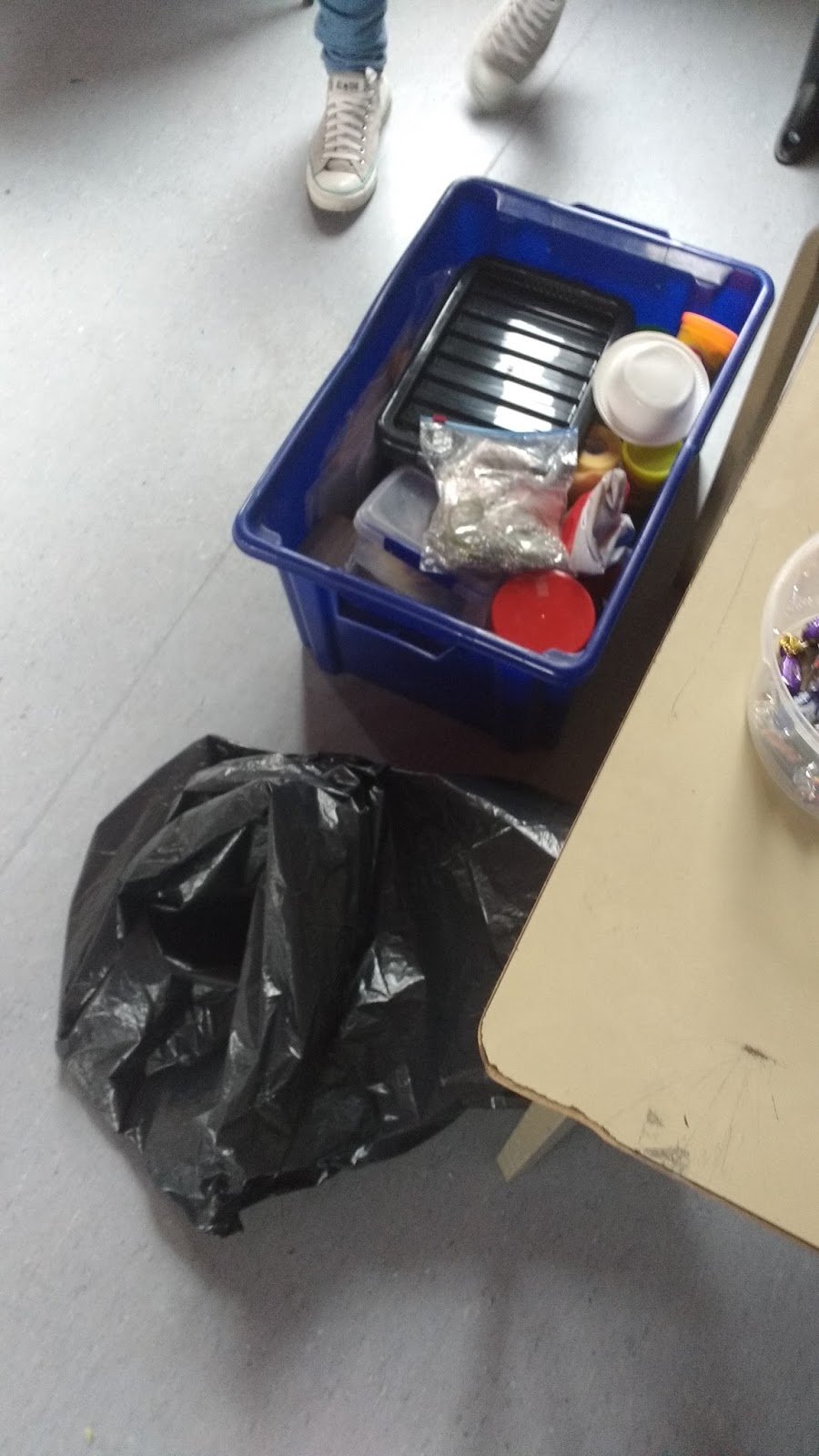
>Right - Box of resources packed away.

Group Photo of Me, two fellow leaders, and the Diocesan Youth Officer.

My part in the event ended, as the youth session was over, however, the overall event was to continue. The next session was a worship session for all the young people that attended. Two songs were sung, both of which had actions. I happily joined in with the actions, which also sparked conversation with other church members later in the day. This then led to the day's activities. Football, walking and craft were the options available, and being a creative person, I chose craft, along with a number of other people.

The craft was to create a form of pin cushion, using a choice of fabrics, card, and a number of other textiles equipment. Though it seems irrelevant to youth work, there were a few young people that decided to do the craft, and with me being new to the church, many conversations were started about where I am from and what I am doing. I used this opportunity to tell them about my Master's Degree, and the project I have chosen. Everyone I told responded enthusiastically about the idea, and they were eager to know more. This could possibly and hopefully lead to me running Games Design events within the church, as I have mentioned to some that it would be good to do. This would then further my research even more.


Photo of the craft session. (Me on the left hand side)


The item that we were making can be seen on the website below:

http://pennyshands.blogspot.co.uk/2010/08/hexie-caddy-tutorial.html?m=1


The next activity consisted of a number of seminars, films and a juggling workshop. I here found the Young people seemed disinterested in any of the seminars, a 'Veggie-tales' film, or the juggling workshop, but being asked to go the juggling to increase the numbers in attendance, a few of us went. The workshop was quite a serious lesson on how to juggle, but we all seemed to have fun, and laughed at each other's failures.

Upon leaving this activity I found a number of young people were gathered together in a secluded area, and were playing on hand held consoles. I proceeded to play on my own hand held, and fit in with them almost instantly.

Next up was food, 'Hot Pot'. This was then followed by a Ceilidh, which continued until 9:00 pm. I joined in with enthusiasm, as did all the young people, children, and adults alike. The whole event was very enjoyable, and I have been invited to return to the church whenever I like.

Though the event may seem that I didn't learn much about my topic, I did learn a few things about Young People and Games.

1. Conversation starter - Talking about games generally triggers an in depth conversation about Video Games. Just as much as talking about football sparks a conversation. Obvious though it may be, triggering a conversation is key to connecting with young people. With a connection made, they are more likely to listen to what you have to say, and to take it in. This I learnt from my first conversation, sparking from their keen interest in Pokémon.

2. Interactive - Games need to be interactive and fun. If there is a group of young people, all of them need to have a form of task to keep them interested, so games should include everyone in some way. As with the game where the young people had to move beads with match sticks, half the team took part in the task, whilst the rest were told to cheer them on. Though cheering doesn't seem much, it kept them interested and focused on the task at hand. With any Games Design workshops I plan, I intend to give a job to all the young people in attendance, and ensure no-one is left out.

3. Competitive - Nothing builds team work like a bit of friendly competition. With young people that may not usually talk to each other, or if there are new people visiting, forming a team and playing a competitive game can spark friendship though a common interest, to win. The competitive aspect was also shown with a particular mobile game that some young people were playing, and were taking it in turns to get the highest score.

4. Want to be rewarded - This follows well from the previous point. Young people generally want to know if they are doing good work, and like to be rewarded for doing well. Whether this is through a simple 'Well done' or other compliment, or through prizes for doing well. Rewards at the end of a competition go down brilliantly. One particular person attempted to switch teams in order to gain a sweet at the end of a game.

5. Prevent Boredom - Though it's sad to admit it, young people can find church a little dull. This is why there are a number of youth groups and events which make it more interesting and fun for young people to partake. Games bring enjoyment, and a great number of people play them when they feel bored, or have nothing else to do. Therefore, games could naturally fit into youth meetings, relieving boredom if there is any, regaining the young person's attention and teaching them with a tool that many of them enjoy using in their day to day life. This I learnt from when I found the young people playing on hand held consoles together, while they waited for food.

6. Enjoy watching people play - Not only do young people enjoy playing games themselves, they also enjoy watching other people play games, and the outcomes of that person playing. Watching people play, laughing at their failures and their multiple attempts, wanting to try yourself to see if you can do better. This links both the competitive aspect, and also brings me to my next point.

7. Social - Games are social. They spark conversations and bring people together under a common interest. Discussions sparked about the various games that people had played, which console they have, which Pokémon they had, or which characters they had unlocked.

8. Keep in contact - I had never realized how prominent the friend codes on the Nintendo DS systems were, and how they could actually be used to keep in contact with someone, rather than jumping straight into befriending on Facebook or exchanging phone numbers. This I learnt when I was leaving the event, and the young people told me to wait so we could exchange friend codes. I myself knew of the friend codes, but only ever used them when I needed to. This has put the friend code aspect of the Nintendo hand held systems into a whole new light for me.

Conclusion -
So, to conclude my wall of text, I have learnt 8 different points, some of which may have been obvious to start with, yet I have now have evidence to prove them. These points will be crucial for my university studies, as well as for any future youth events I may partake in.
02 October 2015

Mini Project

Task No. 2 - Start a mini project to start off your research, and to develop ideas.

Cue Mind Map number 2


I have now decided to create a town/village where a number of bible characters live inside of RPG Maker VX Ace. I will create dialogue between the player and characters, and the player will be able to explore the area.

Powerpoint Presentation

Here is a copy of my PowerPoint, with an explanation of what I talked about for each one. (Images on the first three slides are my own images, all other images are taken from other sources, and I do not take credit for them.)

Slide 1: Previous work - High School. Having taked Product Design and Fine Art in high school, I created a number of physical outcomes. An architechual project in Product Design led to the design of two buildings using Google SketchUp. The other 4 images show my A-Level artwork. Land art (Spiral in snow) Recycling symbol - Painted onto a collection of unwanted items. The Owl and the Pussy Cat - Painted onto books (Inspired by Mike Stilkey). Tree - Made of metal and old drinks cans.

Slide 2: 1st and 2nd year work at University. Character Design - Fabric character (Iconic Silhoette) and three simple shape robots (Cannon Fodder). Game Design - Imagine. Environment Design - Gingerbread house. Level Design - Hansel and Grettel and Lego Wizard of Oz.

To see more images of my past artwork, visit my website:


Slide 3: 3rd year work at University. During my third year i completed 2 projects. The first being my Honours, where I created and developed a Games Design workshop that will actually be run in next year in March. I have built Blackburn Cathedral inside of UDK (Unreal Development Kit), which will be the setting for the game that will be created in the workshop.

My second project was my Games Proposal, where I created a game idea that attempts to relate the emotions and feelings that a person would go though, if they discover than they are no longer able to see. This was an attempt help people sympathise and relate to more with people that are visually impared.

For more info on these two projects, follow the link below to access them from my website.

http://eworrall-leveldesign.my-free.website/games


Slide 4: Games that I like. I don't have a particular genre of game that I enjoy. Basically, if it interests me, then I will likely be happy to play it. 

 Slide 5: Books that I like. I enjoy an adventure that I can escape into. 


Slide 6: Avid Scouter - Part of the Baden Powell Scouts Association - Assistant Scout Master. Attained highest award in scouting, completed the three peaks challenge and both the senior and rover discovery award. Basically, I like to hike. :P 


Slide 7: Errrrm.......? Well, I wasn't too sure what my Masters project would entail specifically.


Slide 8: I did know that I wanted to research why Young people are so interested in games, and how this interest could be used to teach them in a christian environment.


Slide 9: I also wanted to gain experience in a range of different Game Engines.


 Slide 10: Research - Library (Books) and various websites.


Slide 10: Research - Meuseums (Though it seems meuseums are completely unrelated to youth work, inspiration can spark from anywhere.)


Slide 11: Research - Primary research. Attending youth training courses, running my games design workshop, approaching C of E Schools, and contacting companies.


Task 1 - Create a PowerPoint.

Our first task was to create a PowerPoint that showed the following.  
  • What skills you bring? (What did you do before you came here?)
  • What interests you? (Show us some examples of what you think is the best)
  • What is your initial idea for your MA study? (Why are you here?)
  • What things are you going to look at? (Why is it important?)


So in simple terms I had to talk a little bit about myself, my skills and things I liked to do. Then to talk about the idea I had for my Masters, and how I would research the topic.


Mind Mapping

In order to decide on a specific topic to research, I decided to create a spider diagram of ideas and topics that I felt I wanted to learn more about. I ended up deciding that I wanted to know why young people find games interesting, and how this interest could be used in a Christian educational environment.